

By Filippo Cagliero · cf0 Chief Strategy Officer
Published 8 May 2026 · cf0research.substack.com
Published 8 May 2026 · cf0research.substack.com
Conviction statement. “The physical infrastructure — power, cooling, aerospace, defense, rail — is underowned, undervalued, and entering a multi-year capex cycle with sovereign backing.”
The HALO thesis in one chart
A structural rotation toward companies whose moats rest on heavy physical assets — assets that take decades to replicate and cannot be coded away. The risk-return scatter below frames the case: HALO names cluster top-left (better risk-adjusted return than the AI basket), while a handful of AI names sit further right on the volatility axis.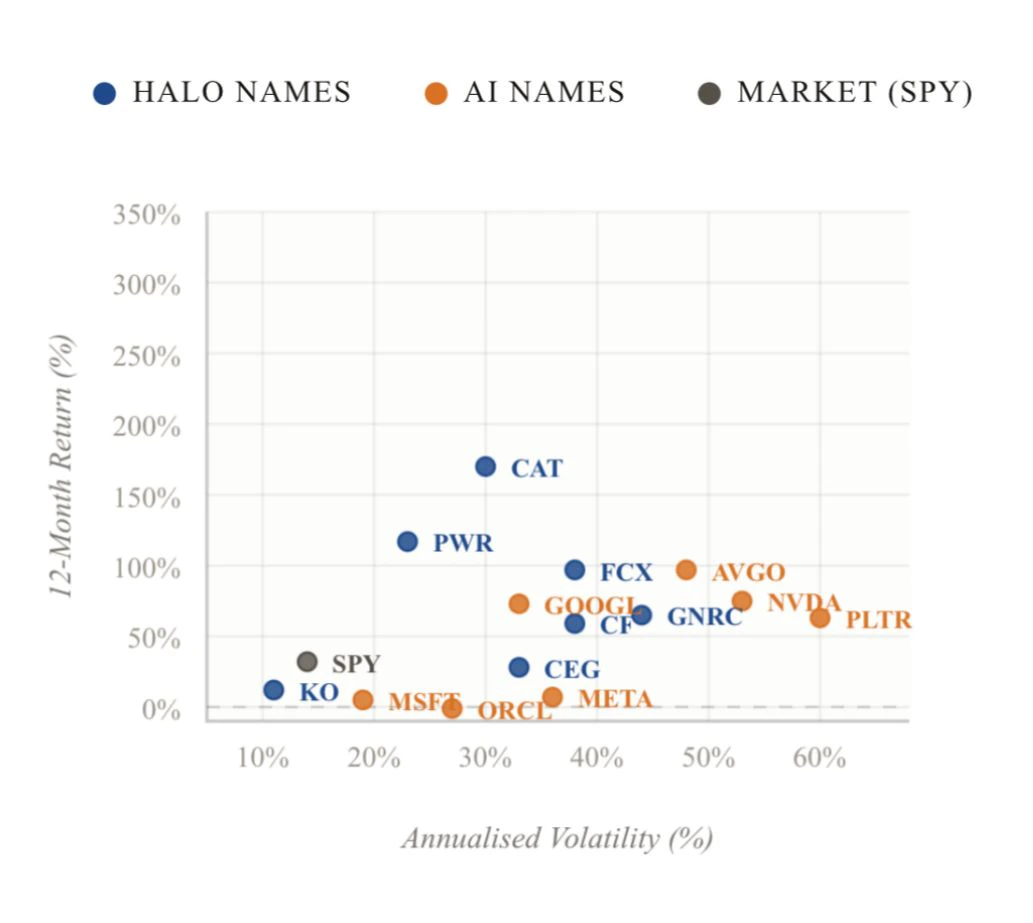
The six themes powering it
The note decomposes the thesis into six themes, each with a near-term momentum score and a 2027 durability read. Concentration risk is flagged where a theme leans heavily on a single name.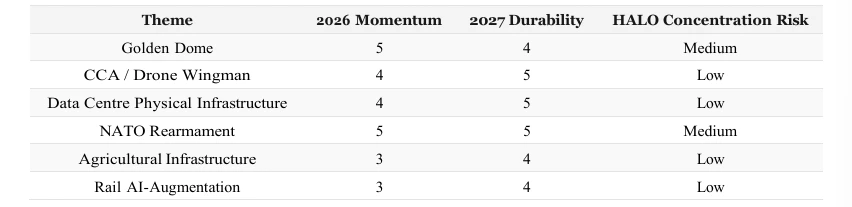
How each name maps across themes
The heatmap below scores fourteen HALO names against the six themes — useful for spotting where exposure concentrates (defence platforms is heavy across LMT / NOC / KTOS / AVAV / RTX / HII / GEA / LOAR / TDG) and where it doesn’t (energy infra has one name; logistics & rail has three).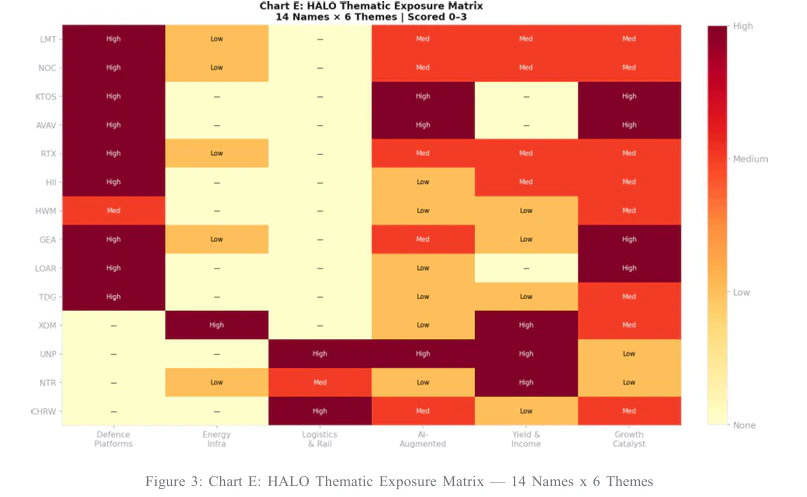
What this used
This note used every part of cf0:- SEC + global filings — 10-Ks and 10-Qs for each HALO and AI name, pulled and parsed.
- Lab — the surface where the thesis was framed; one thread held the macro setup, the screener output, the per-name tearsheets, the scenario sensitivity, and the chart inputs.
- Skills — recurring research moves bound to a slug, so the same scenario / sensitivity passes can be re-run on a new ticker in one command.
- Reports — the polished output exported as a branded PDF before publication to Substack.
Read the full note
Bricks Beat Bytes: The 2026 HALO Trade
Full report — 8 May 2026 · cf0 researchConviction statement, macro setup, theme-by-theme deep dive, LOHA ETF mechanics, fourteen company tearsheets, scenario sensitivity, and follow-up questions. Open on Substack.